
How Are Vehicles Tested?
Comprehensive crash tests simulating real-world scenarios to evaluate vehicle safety
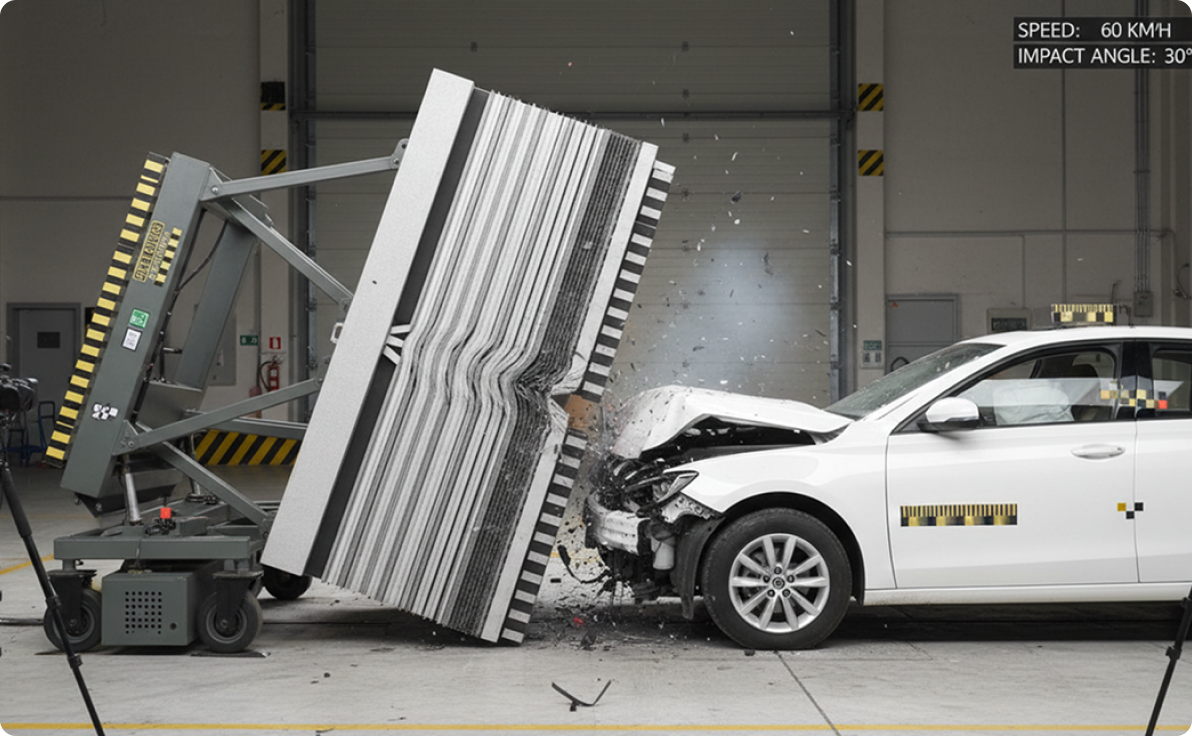
Mobile Progressive Deformable Barrier (MPDB) Test
The MPDB test represents a frontal collision between two vehicles of similar mass. A mobile deformable barrier, simulating front of another car, strikes the test vehicle at 50% overlap. This test evaluates how the vehicle's structure absorbs and distributes impact forces to protect occupants. This progressive barrier design ensures a more realistic assessment of modern vehicle structures, measuring chest, head, and leg protection for both front occupants while assessing integrity of the safety cell.
 Test.png)
Full-Width Rigid Barrier Test
In this test, the vehicle impacts a solid, non-deformable barrier across its full width at 50 km/h. This represents a head-on collision with an immovable object or a vehicle of significantly greater mass. The test focuses on restraint system performance and occupant protection. Advanced crash test dummies measure forces on head, neck, chest, and legs, while high-speed cameras capture airbag deployment timing and structural response of passenger compartment.
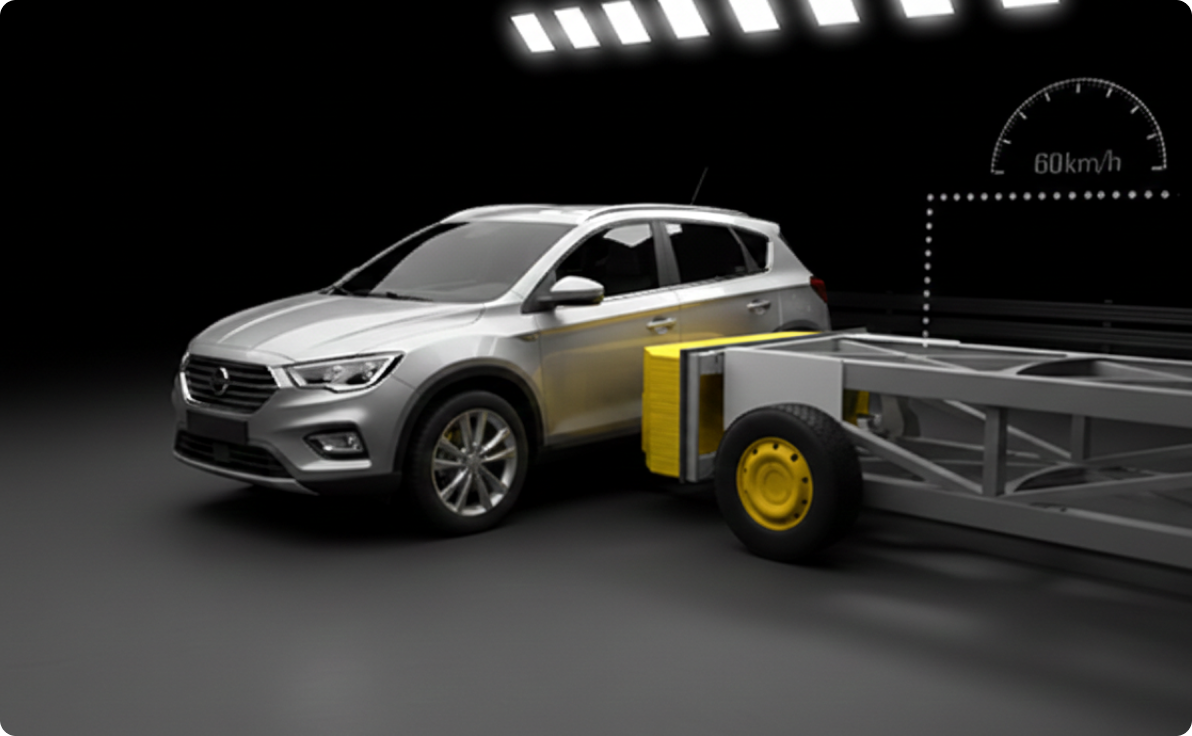
Side Barrier Impact Test
A mobile deformable barrier representing another vehicle's front strikes the driver's side of the test vehicle at 60 km/h. This replicates intersection T-bone collisions, one of the most dangerous crash types. The test evaluates side airbag systems and structural integrity. Sensors measure chest, abdomen, and pelvis protection, while assessing door intrusion and B-pillar strength to ensure the passenger compartment maintains its protective envelope during side impacts.
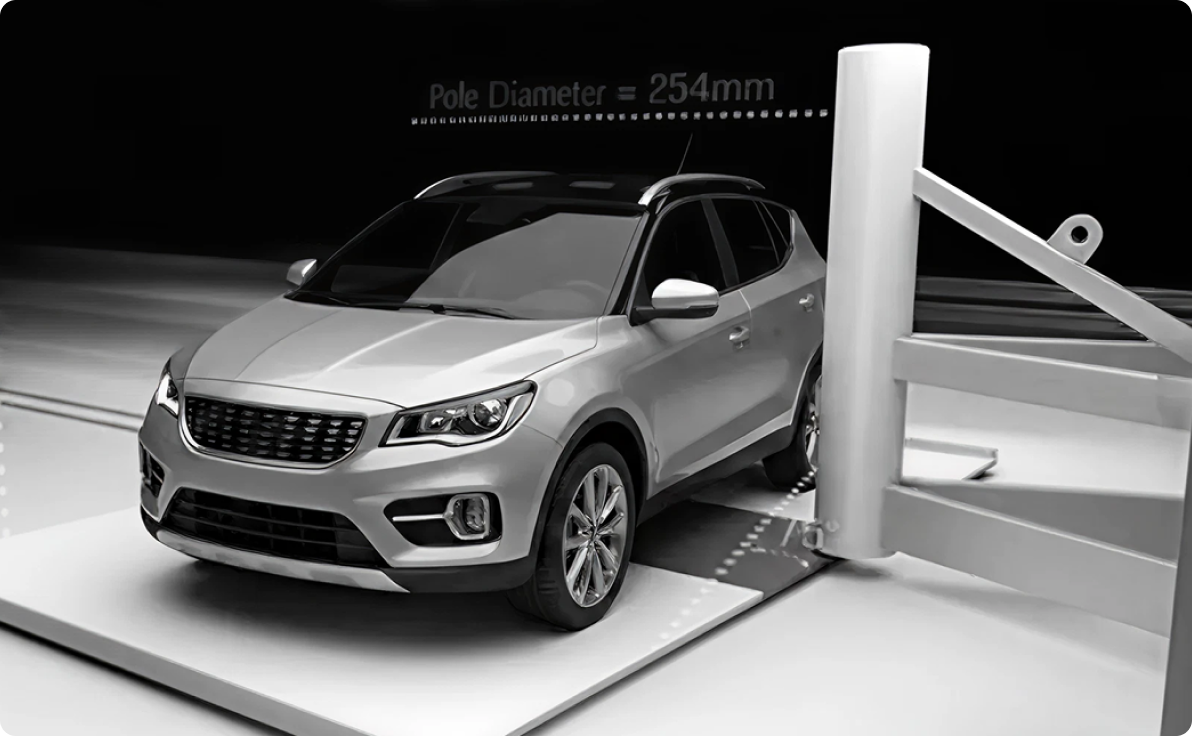
Side Pole Impact Test
The vehicle is propelled sideways into a rigid pole positioned to strike the driver's head region at 32 km/h. This simulates sliding into a tree or pole, focusing specifically on head protection through side curtain airbags. This test uses sophisticated head injury criteria measurements to assess the risk of traumatic brain injury, evaluating both timing and coverage of side curtain airbag deployment.
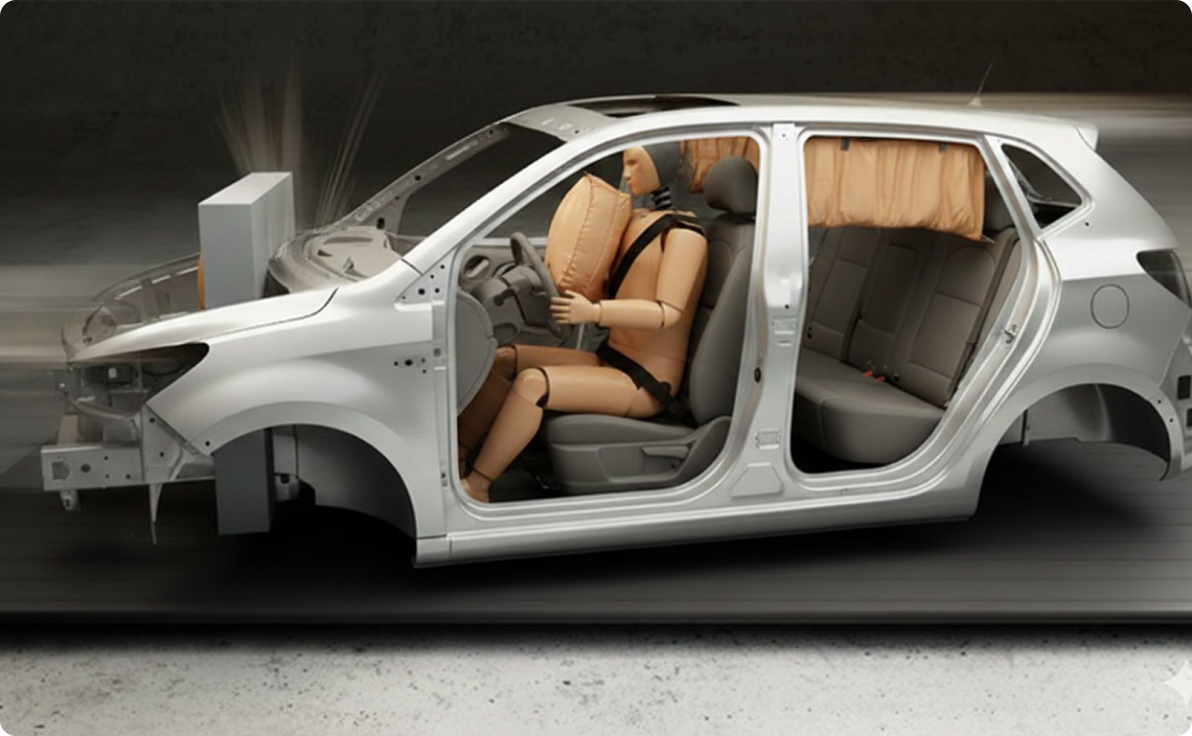
Far-Side Occupant Protection
This assessment evaluates protection for the passenger on the opposite side of a side impact. In a left-side collision, the right-front passenger can be thrown towards the impact side, risking head contact with the struck occupant or vehicle structures. The test measures head excursion and contact forces, assessing the effectiveness of center airbags and restraint systems designed to protect far-side occupants during lateral collisions.
 Tests.png)
Autonomous Emergency Braking (AEB) Tests
AEB systems are tested across multiple scenarios: car-to-car (front and rear), pedestrian detection (adult and child), and cyclist detection. Each scenario uses different approach speeds to evaluate the system's ability to detect hazards and brake automatically. Tests assess whether the vehicle can avoid collisions entirely or reduce impact speed significantly, with measurements of detection range, response time, and braking effectiveness across day and night conditions.
Whiplash Protection Assessment
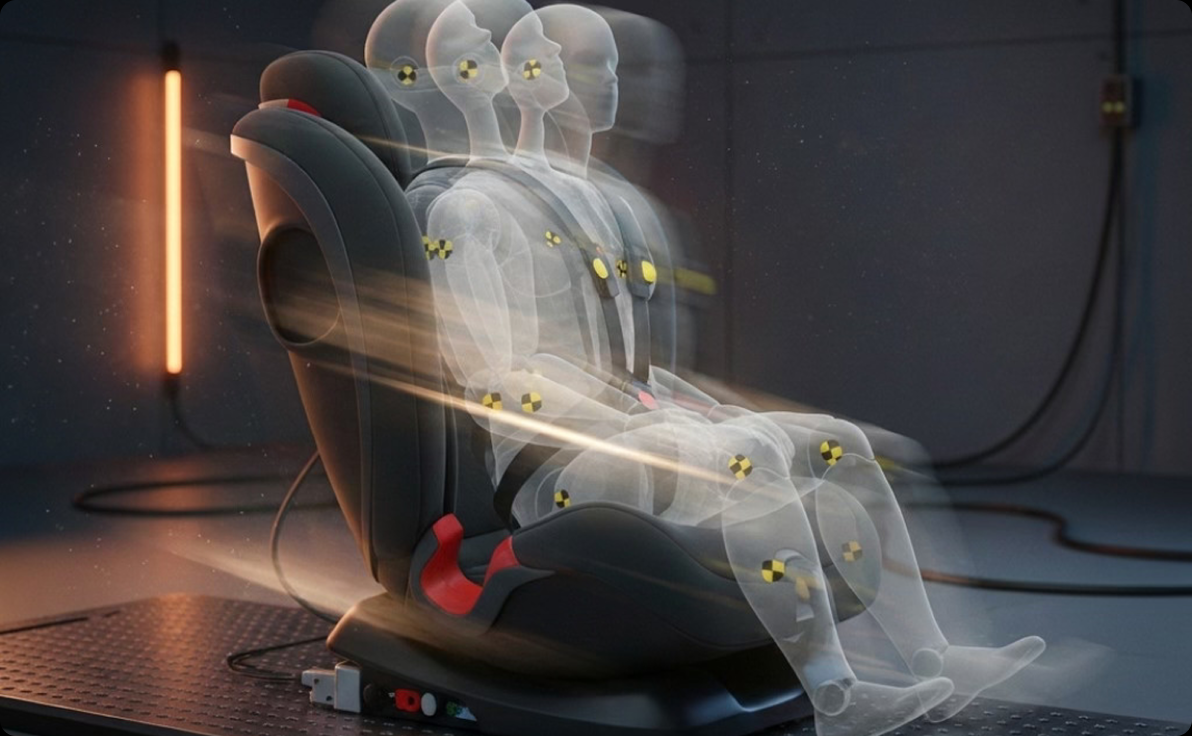
A test seat undergoes simulated rear-end collision forces to evaluate seat and head restraint design. Whiplash injuries are among the most common in rear impacts, making this assessment crucial for reducing long-term injury rates. The test measures head restraint geometry, seat back support, and dynamic performance using biofidelic criteria to assess neck injury risk. Proper head restraint position and seat design can significantly reduce whiplash severity.
Explore More Resources
Dive deeper into vehicle safety with our other comprehensive guides